
Travelling with your dog can be one of life’s greatest joys — but when you’re heading into warm or hot climates, it also comes with serious responsibilities. Dogs are far more sensitive to heat than humans, and without the right precautions, a fun trip can quickly turn into a dangerous situation.
In this guide, we’ll cover everything you need to know to keep your dog safe, comfortable, and happy while travelling in warm weather — whether you’re road‑tripping across Australia, flying to a tropical destination, or simply heading to the beach for the day.
Why Warm Climate Travel Can Be Risky for Dogs
Dogs regulate their body temperature differently from humans. They can’t sweat through their skin — only through their paw pads and by panting — which means they overheat much faster.
Risks include:
- Heatstroke – Can occur in minutes, especially in enclosed spaces like cars.
- Dehydration – Loss of fluids through panting without adequate replacement.
- Burned paw pads – Pavement, sand, and even boat decks can reach dangerous temperatures.
- Sunburn – Particularly for light‑coloured or thin‑coated breeds.
Older dogs, puppies, brachycephalic (short‑nosed) breeds like pugs and bulldogs, and dogs with thick coats or certain health conditions are at higher risk.
Pre‑Trip Preparation
Vet Check‑Up
Before any trip, schedule a health check with your vet:
- Ensure vaccinations are up to date.
- Discuss parasite prevention (fleas, ticks, heartworm) — warm climates often mean higher risk.
- Ask about motion sickness remedies or calming aids if your dog is an anxious traveller.
- Request a health certificate if travelling interstate or internationally.
Identification & Microchipping
- Ensure your dog’s microchip details are current.
- Use a collar with an ID tag showing your mobile number and travel destination.
- Consider a GPS tracker for extra peace of mind.
Packing Essentials
A dedicated dog travel kit should include:
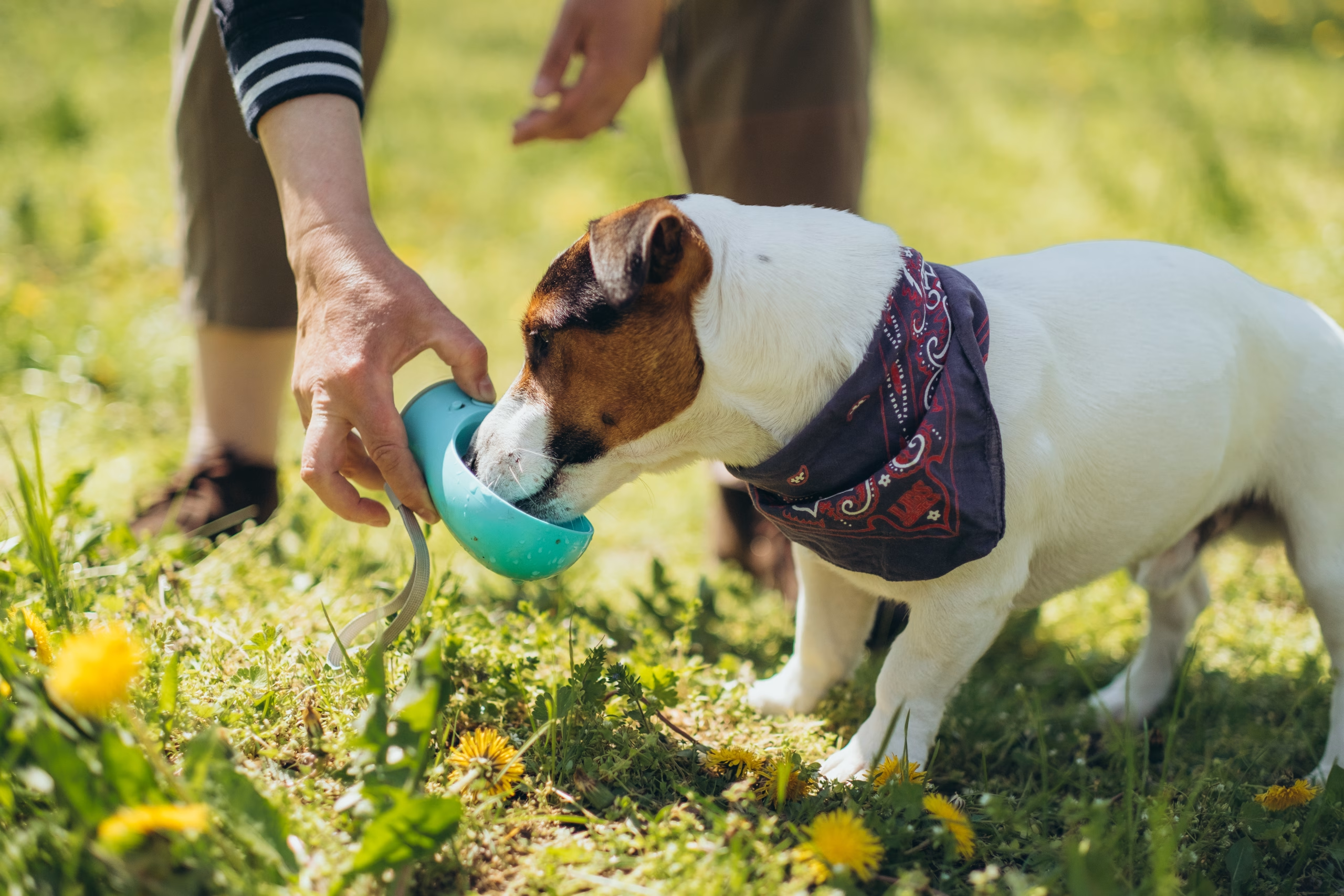
- Fresh water & portable bowl
- High‑quality food & treats
- Leash, harness, and waste bags
- Cooling mat or vest
- Paw balm for hot surfaces
- First‑aid kit (including electrolyte solution)
- Shade options (pop‑up tent, umbrella)
- Towels for drying after water play
Car Travel Safety in Warm Climates
Never Leave Your Dog in a Parked Car
Even with windows cracked, the temperature inside a car can soar to over 50°C in minutes — leading to heatstroke, brain damage, or death.
Keep the Car Cool

- Use air conditioning or open windows (while ensuring your dog can’t jump out).
- Fit sunshades to rear windows.
- Travel during cooler parts of the day — early morning or evening.
Hydration on the Road
- Offer water every 30–60 minutes.
- Use a spill‑proof travel water bottle for convenience.
- Add ice cubes to the water for extra cooling.
Secure Your Dog
- Use a crash‑tested harness or secured crate.
- Never let your dog ride with their head out the window — it risks injury and eye damage.
Plan Frequent Breaks
Stop every 2–3 hours for toilet breaks, stretching, and cooling down.
Air Travel Considerations
Flying with a dog in warm climates requires extra caution:
- Some airlines have temperature restrictions and won’t fly pets if it’s too hot.
- Brachycephalic breeds are often banned from cargo travel in summer due to breathing risks.
- Choose direct flights to minimise time in transit.
- Travel in the coolest part of the day.
- Use an airline‑approved crate with ventilation on all sides.
💡 Tip: If possible, keep your dog in the cabin with you — it’s safer and less stressful.
Outdoor & Destination Safety
Beach Safety for Dogs
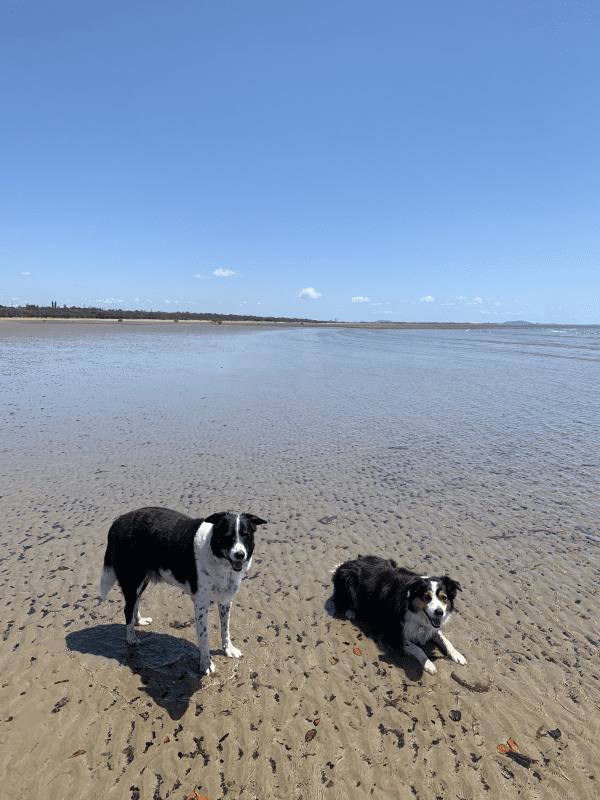
- Check if the beach is dog‑friendly.
- Avoid midday sun — sand can burn paws.
- Provide shade and fresh water.
- Rinse off saltwater to prevent skin irritation.
- Watch for strong currents and rips — not all dogs are natural swimmers.
Dog Swimming Safety
- Use a canine life jacket for boating, kayaking, or deep water.
- Supervise at all times — even strong swimmers can tire quickly.
- Avoid stagnant water (risk of bacteria, parasites, blue‑green algae).
Hot Surface Awareness
- Test pavement or sand with your hand — if it’s too hot for you, it’s too hot for your dog.
- Walk during cooler hours.
- Use paw balm or protective boots if needed.
Sun Protection
- Apply pet‑safe sunscreen to exposed skin (nose, ears, belly).
- Provide shaded rest areas at all times.
Hydration & Nutrition in Warm Climates
Hydration Tips
- Carry twice as much water as you think you’ll need.
- Offer small, frequent drinks rather than large amounts at once.
- Use collapsible bowls for convenience.
Cooling Treats
- Bring homemade dog ice blocks or frozen treats.
- Offer hydrating snacks like cucumber or watermelon (seedless).
Feeding in the Heat
- Feed smaller, more frequent meals.
- Avoid heavy meals before strenuous activity.
Recognising & Responding to Heatstroke
Signs of heatstroke include:
- Excessive panting or drooling
- Bright red gums or tongue
- Weakness, collapse, vomiting, diarrhoea
- Seizures
What to do:
- Move your dog to a cool, shaded area.
- Wet them with cool (not icy) water.
- Offer small sips of water.
- Seek veterinary care immediately.
Warm Climate Travel Checklist
Before You Go:
- Vet check & vaccinations
- Updated ID & microchip
- Travel insurance that covers pets
- Route planning with pet‑friendly stops
On the Road:
- Never leave dog in car unattended
- Frequent water & rest breaks
- Keep car cool & shaded
At Destination:
- Provide shade & cool rest areas
- Monitor for signs of overheating
- Keep to cooler activity times
Final Thoughts
Travelling with your dog in warm climates can be safe and enjoyable — if you plan ahead and stay vigilant. The key is to think like your dog: they can’t tell you when they’re too hot, thirsty, or tired, so it’s up to you to anticipate their needs.
With the right preparation — from cooling gear and hydration strategies to safe travel routines — you can explore beaches, parks, and sunny destinations together without putting your best friend at risk.