
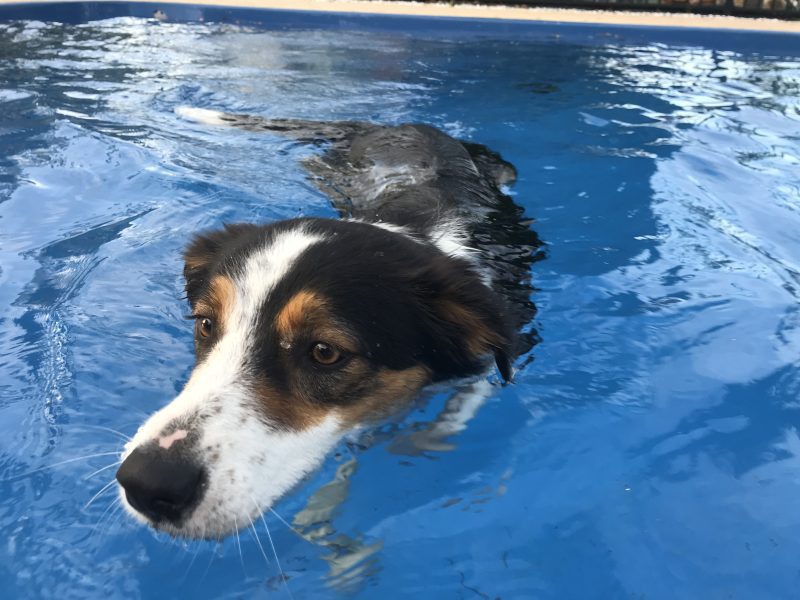
Yes, there are so many health benefits for your dogs to swim in the pool and many dogs can swim in a pool. However, there are a few safety aspects to consider first to ensure your dog will stay safe and enjoy their swim.
Health and Fitness
Swimming is a low-impact activity, that is gentle on dog’s joints and muscles. This is ideal for older dogs or those with arthritis or other mobility issues to keep moving and stay fit and healthy. Swimming will help build and maintain muscle tone and overall fitness from the resistance of the water. Providing a great workout without putting stress on the body.
Swimming is also great for your dog’s mental health. It is mentally stimulating and made engaging for dogs especially when adding activities can be exciting and enjoyable.
Prior to swimming make sure your dog is healthy enough for swimming. Older dogs or those with certain health conditions might need a vet’s approval before taking a dip.
Breeds and Physical Traits
It is commonly found that some breeds are natural swimmers while others may struggle or not enjoy it as much. These may be due to the breed, physical traits or fear/trauma.
Breeds That Generally Enjoy Swimming are:
– Retrievers: Breeds like Labrador Retrievers, Golden Retrievers, and Flat-Coated Retrievers are known for their love of water and swimming.
– Spaniels: Cocker Spaniels and English Springer Spaniels often enjoy water activities.
– Poodles: Standard Poodles are also known to be good swimmers and enjoy the water.
Breeds That May Be Less Enthusiastic:
– Bulldogs: Due to their body structure and short snouts, Bulldogs may struggle with swimming and may not enjoy it.
– Pugs: Similar to Bulldogs, Pugs have a brachycephalic (short-nosed) structure, which can make swimming challenging and less enjoyable for them.
– Basset Hounds: Their short legs and long bodies can make swimming difficult, so they might not take to it as naturally.
Dogs With Individual Preferences:
– Temperament: A dog’s individual personality plays a significant role. Some dogs may be naturally drawn to water, while others might be more hesitant or fearful.
– Early Exposure: Dogs that are introduced to water and swimming at a young age are often more comfortable with it. Positive experiences with water can help build a dog’s confidence.
– Training and Socialisation: Dogs that have had positive reinforcement and training around water are generally more likely to enjoy swimming.
If you’re introducing your dog to swimming for the first time, start slowly and make the experience positive. Use treats and praise to encourage them and ensure the environment is safe and comfortable.
Pool Safety
Always supervise your dog while they’re in the pool. It is a must that they are never leaf alone in or around the pool. Even if your dog is a strong swimmer, accidents can happen quickly.
Make sure your dog can easily get out of the pool. Install a ramp, steps, or provide another safe exit method to prevent them from getting trapped or exhausted. Consider using a dog life vest, especially if your dog is a beginner swimmer or if you’re swimming in a deeper pool. It can provide extra buoyancy and safety.
Be sure to provide fresh water for your dog to drink whilst in the pool as they are will still be at risk of becoming dehydrated. Monitor how long your dog has been in the pool for and keep an eye out for signs of fatigue or distress, such as heavy panting, struggling to stay afloat, or disorientation. If you notice any of these signs, remove your dog from the pool immediately and let them rest.
To learn more about pool chemicals visit Pool and Spa Group.
Pool Chemicals
Chlorine and other pool chemicals can irritate your dog’s skin and eyes. Rinse your dog off with fresh water after swimming to help remove any residual chemicals.
– Rinse Off: After swimming, rinse your dog with fresh water. Chlorine and other chemicals in pool water can irritate a dog’s skin, leading to dryness, itching, or rashes. Some dogs may be more sensitive than others. Prolonged exposure can also affect the health of your dog’s coat, making it dry or brittle.
– Dry Thoroughly: Make sure to dry your dog thoroughly, especially their ears, Dogs with floppy ears or those prone to ear infections are particularly susceptible to irritation and infections from chlorine. Water in the ears can exacerbate these issues
– Ingesting Pool Water: If a dog swallows pool water while swimming or drinking from the pool, they might experience digestive upset, such as nausea or vomiting. This is particularly a concern if the pool water contains high levels of chemicals.
Pool water temperature
Ensure the water temperature is comfortable for your dog. Dogs can be sensitive to extreme temperatures. The ideal water temperature for dogs to swim in is typically between 21°C and 26°C. Water within this range is usually comfortable for most dogs and helps ensure they enjoy their swim without getting too cold or overheated. Most breeds will find this temperature range pleasant and won’t face issues related to water temperature.
Check the comfort of your dog’s behaviour in the water. If they seem uncomfortable, shivering, or reluctant to swim, the water temperature might not be suitable. It is always good to also consider the weather and air temperature as well. Cold air combined with cold water can be particularly uncomfortable.
By keeping these points in mind, you can ensure that your dog’s swimming times are enjoyable and safe. If you’re unsure or notice any signs of discomfort, it’s always a good idea to consult with your vet.
With these considerations in mind, many dogs enjoy swimming, and it can be great exercise and fun for them!